
What’s Your Story? In Conversation with Holly Reynolds
By Brielle Walsh
On the weekend she was meant to get married, a young woman sat on the couch in her apartment with a bottle of champagne and a deck of What’s Your Story? conversation cards.
Her wedding had been postponed. COVID had rewritten the plans, the guest list, the future she thought she was stepping into. Instead of speeches and dancing, it was just her and her partner flipping through questions neither of them had ever thought to ask out loud.
By the end of the night, they were rewriting their vows. They had learned things about each other they’d never known before.
It’s one of many stories Holly Reynolds has been sent over the years, and it perfectly captures exactly why she made What’s Your Story? in the first place. Not as a product. Not as a brand. But as a way in.
Holly is the founder and director of a communications agency specialising in property and development, a world obsessed with structures, timelines and outcomes, yet she speaks almost exclusively about people.
“While our clients are very focused on the bricks and mortar of what they’re building, I think property is really about people,” she says. “Understanding how to communicate and build trust around change is really important.”
It’s a mindset that runs through everything she does, including What’s Your Story?.
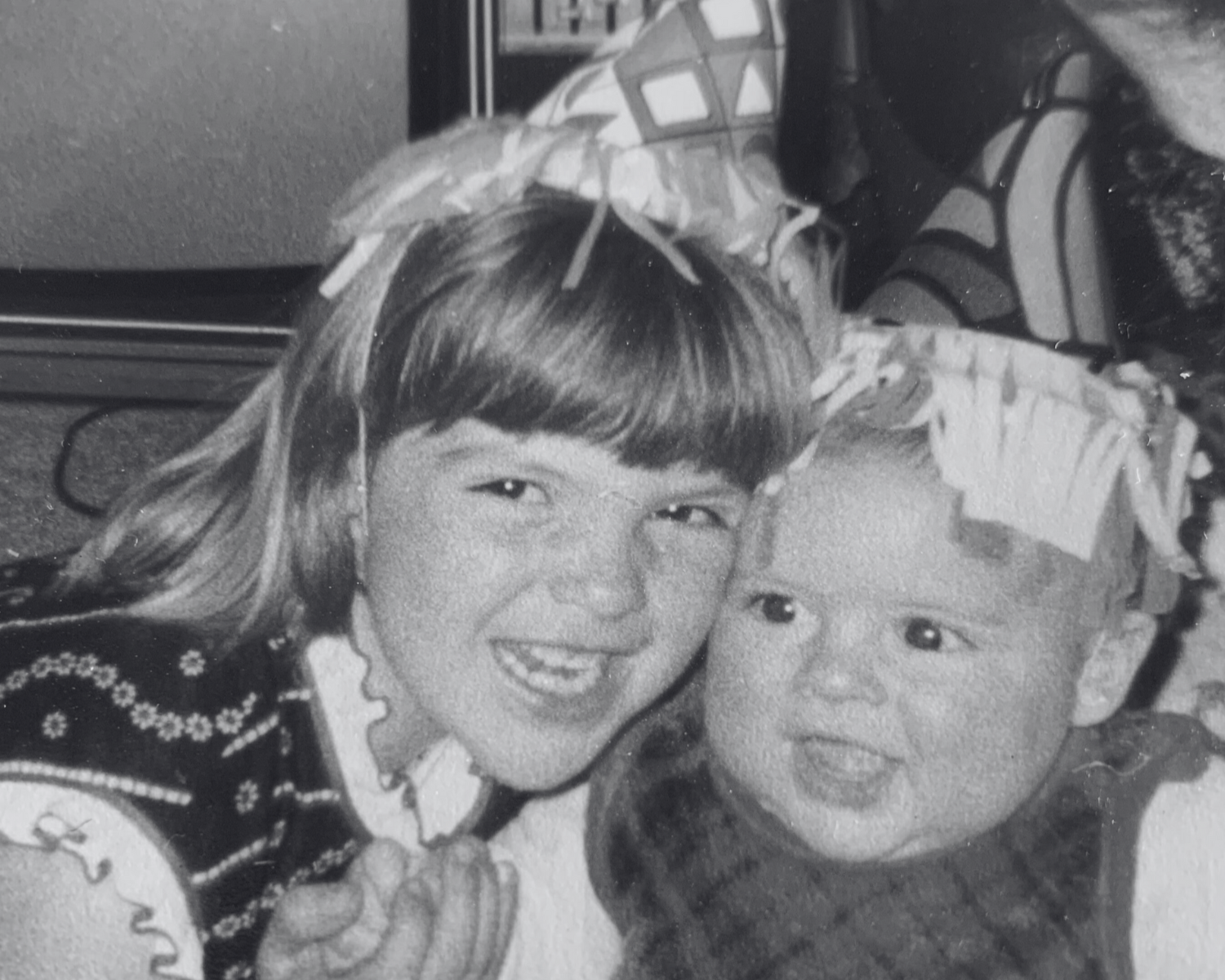
“I think we’re all walking around with chapters and chapters inside us,” she says. “We just don’t often get the right questions.”
The idea for the game came from a family moment, years before it ever became a deck of cards. It was a period of uncertainty, with a room full of people trying to process something difficult. A collective sense that everyone had something to say, but no shared way to say it. What followed was conversation, real conversation, the kind that moves slowly and brings laughter, then tears, then long silences that feel strangely comforting. People who had known each other for decades told stories no one had ever heard, and Holly couldn’t shake the feeling that something important had happened.
She took that experience to Gillian Corban and Amanda Blair at Corban & Blair, sitting around a big red table in their studio, and asked a simple question: How do we bring this into the world? It was Gill’s idea to put it in the format of a deck of cards, and together they shaped the first edition of What’s Your Story?, turning a personal moment into something that could be shared.
That was twenty years ago, and What’s Your Story? has been quietly circulating ever since.
The first edition of What’s Your Story? was created on a shoestring budget, using family photographs, friends as test subjects and fifty open-ended questions that balanced approachability with depth.
What makes you laugh?
Who was your first love?
What are you most proud of?
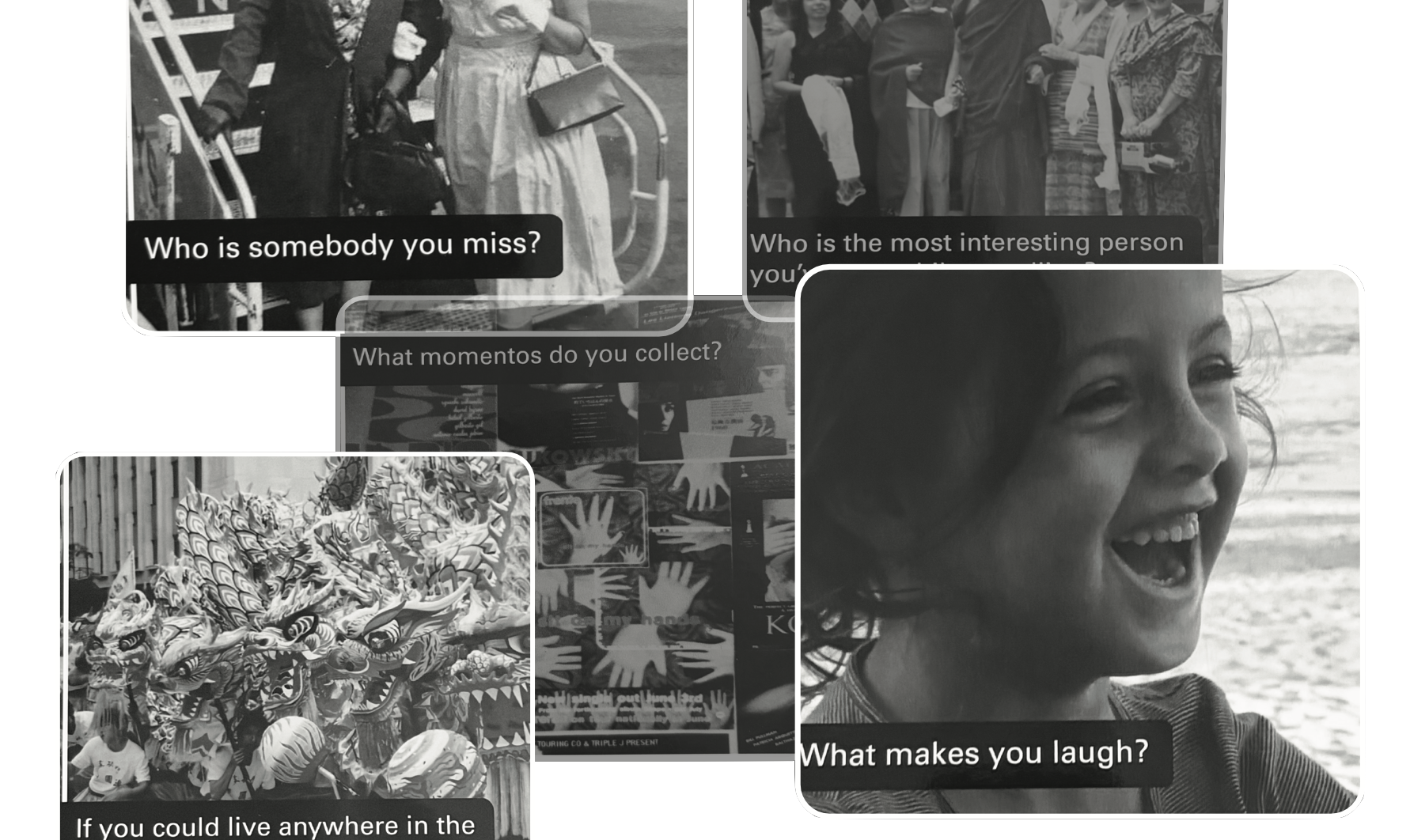
“They’re not questions you’d normally ask, even of people you know really well,” Holly says. “But somehow, when they’re on a card, it feels safer. Like you’ve been given permission.”
That permission is what has allowed the game to quietly travel into spaces Holly never expected. Dinner parties and drinking games, yes, but also therapy sessions, classrooms, boardrooms, churches and aged care homes. One of the most surprising stories came from a high-needs aged care village, where carers began using the cards with residents.
“It wasn’t just about routines anymore,” Holly says. “It helped staff really know the people they were caring for…who they were before they were residents.”
Despite living in a hyper-connected world, one where we are constantly visible, constantly reachable, Holly believes many of us are quietly starved of genuine presence. We follow each other. We comment. We react. We consume endless content tailored perfectly to our preferences. But very little of it asks us to reveal anything real.
“The algorithm knows what to feed us, we’re getting what we want to see, but we’re not always being challenged,” she says. “And we’re not always being seen.”
As artificial intelligence becomes more embedded in daily life, she sees human conversation not as something quaint or nostalgic, but increasingly essential. Tools like What’s Your Story? remind us of the beauty of simple conversation, that feeling safe enough to reveal something of yourself can lead to unexpected connection, deeper understanding and more meaningful relationships.
She recalls a recent coffee meeting with someone she’d known professionally for years.
“We ended up talking about things we’d never normally cover” she says. “By revealing a bit more of myself I walked away feeling like I hadn’t just had a catch-up. I felt seen. I felt understood.”
Over the last two decades, Holly has collected hundreds of stories; long dinners that turned into late nights, old friends reconnecting, couples discovering shared fears and forgotten dreams. One of her favourite memories comes from the very first time she played the game with friends.
“Everyone ended up calling their babysitters to stay longer,” she laughs. “We just didn’t want to stop talking.”
It’s easy to dismiss something like What’s Your Story? as a novelty, another card game on the shelf, but that’s never really been its role. It isn’t here to create stories but to reveal them. Often people have the stories inside them already, they are just waiting for them to be unlocked.
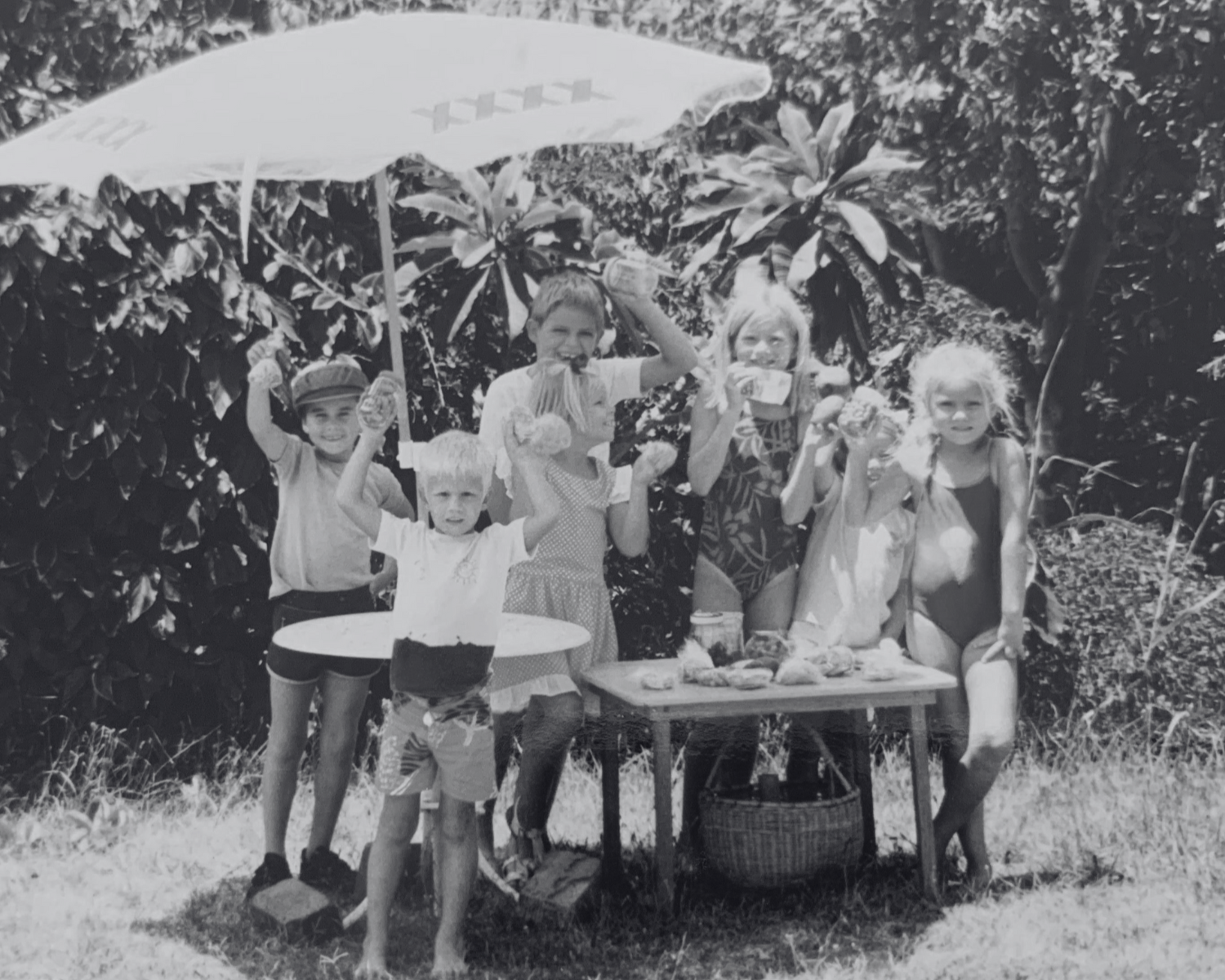
“I think we all fundamentally want to be loved, accepted and understood,” Holly says. “People like to be heard.”
For Holly, the cards are a quiet invitation to slow down, to listen, to be present. A reminder that behind every polished surface, every job title, every curated version of a life, there is a person carrying a story they rarely get the space to tell.
Over time, she’s come to believe that what people are really responding to isn’t the format, or even the questions themselves, but the feeling they create. The sense that someone, across the table, is genuinely interested.
Not because the story is extraordinary.
But because it’s yours.
And sometimes, all it takes to open a window into someone else’s world is the right question, and the belief that what comes back is worth listening to.
When asked what she hopes people take away from the game, she simply puts it:
“That your story matters…and you’ve made someone feel good today.”
Purchase your own What’s Your Story? here.
