
What Counts and What Gets Counted: On nutrition labels, bioactives, and learning to eat again
By Paul H. Mason
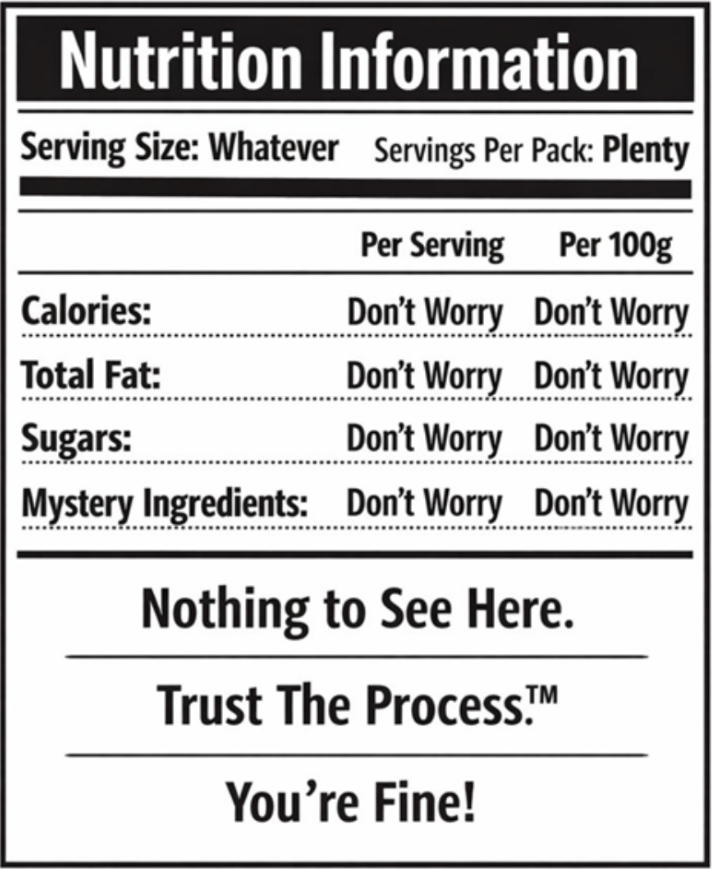
The nutrition panel on the side of packaged food was always the first thing I'd look at while grocery shopping. Wandering the supermarket aisles, I’d study that small rectangular box of numbers as though I knew what I was doing. The recommended daily intake values convinced me that I was nourishing my body properly. The basics were my mantra: calcium for strong bones, vitamin A for eyesight, vitamin C to fight colds. Calories should be kept low. Protein was king. Fibre barely registered. Carbohydrates were acceptable only if I was exercising. Sugar, above all, was the enemy. When faced with two near-identical products, I’d dutifully choose the one with nine grams of sugar over the one with twelve, as if that marginal difference was decisive.
The truth is, I rarely found genuinely low-sugar options. Although, I became very good at believing I had. I learned to read labels in my favour; a smaller serving size, a reassuring claim on the front, a health halo borrowed from a buzzword. I wasn’t lying, exactly. I was practising the kind of self-deception the supermarket quietly encourages. I felt informed and in control, while being gently funnelled toward the same profitable shelves. That little panel carried enormous authority. It trained my attention toward what could be measured, compared, and optimised. The presence of numbers felt like proof that someone else had already done the thinking for me. It pulled my gaze away from other important matters such as freshness, variety, seasonality, and the simple fact of food being alive. Almost everything I bought came with a label, and I didn’t treat that as a warning.
However, these numbers haven’t been on our shelves forever. In Australia, the Nutrition Information Panel was only standardised and made mandatory in December 2002 (the month I moved out of home and into the world of adult choices). At the time, governments framed these labels as a triumph of transparency and a tool for personal responsibility in the face of rising obesity and heart disease. But they were handing us a map drawn in the 1940s. While nutritional advice has shifted repeatedly — fats rehabilitated, sugars rebranded, food pyramids demolished — the label remained a fixed, timeless truth.So, why have we been taught to hold so tightly to a scorecard that is younger than our parents?
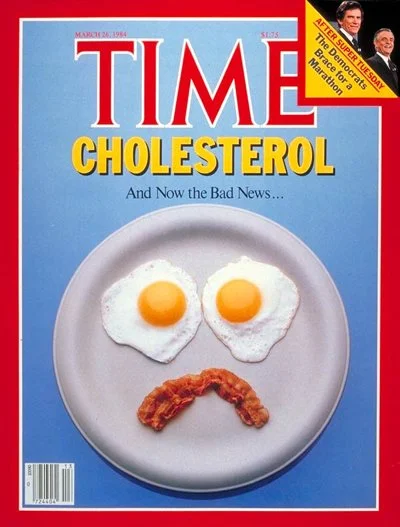
TIME Magazine cover from March 26, 1984.
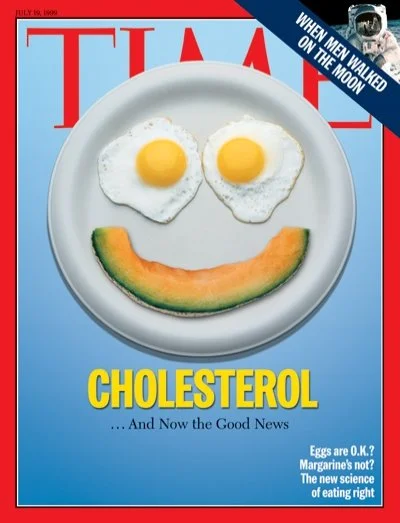
TIME Magazine cover from July 19, 1999.
In attempting to answer this question, I discovered one of the key ingredients often missing from every label: bioactives. These are compounds that rarely appear on the nutrition panel unless they're being used as a selling point. You might see a product advertised as “high in antioxidants,” but bioactives themselves are not classified as essential nutrients...at least not yet. They sit in an odd limbo: beneficial, well-studied, widely present in whole foods, but largely invisible to the systems that tell us what counts.
“Bioactives” is an umbrella term for compounds that sound almost pharmacological in their effects, but remain food by classification. Think anti-inflammatory, antioxidant, immune boosting, cholesterol-lowering, memory enhancing, and neuro-protective. Bioactive content varies between plants, seasons, soils, and storage conditions. More importantly, they do not fit the historical logic that the nutrition panel inherits: a framework shaped by earlier concerns with deficiency, standardisation, and survival. Vitamins and minerals were identified because their absence caused immediate harm. Bioactives, by contrast, work slowly, synergistically, and systemically. They support long-term resilience. Their benefits are cumulative, contextual, and central to a long, healthy life. They invite us to rethink nutrition not through the lens of sterility and shelf-life, but through relationships between living organisms from soil to plant to plate.
I had long sought these benefits in supplements, not realising they could be sourced directly from plant foods. Somewhere in the back of my mind, I knew my processed-food diet lacked variety, so I treated these supplements as extras. They were patches, optional upgrades, something to add on rather than something to eat. I failed to see bioactives as a staple.
The more I learned, the more my pseudoscientific logic unravelled. Bioactives are fragile. Freshness, storage, and cooking methods matter. Many are not readily bioavailable unless consumed alongside other compounds in whole foods. That is, they tend to work best as part of a living food matrix, not as isolated ingredients compressed into a capsule. A polyphenol (a class of micronutrients found in plants) extracted and sprinkled into a breakfast cereal might sound impressive, but its main function may be marketing rather than metabolism.
I had been so thoroughly seduced by the objective logic of the nutrition panel that it took a long time for knowledge to translate into behaviour. Following a cultural script written not only by multinational companies, but also by scientists, regulators and educators, I came to see a plastic-wrapped chocolate bar as better value than a kiwi fruit. Somewhere along the way, eating had become an exercise in caloric arithmetic and risk management. I became better at consuming nutrition information and worse at participating in food preparation. Eating narrowed into questions of ‘how much?’; how much sugar, how much protein, how many carbohydrates. It was no longer the creative, sensory, and social practice I remembered from my parent’s generation.
This inversion is not accidental. Our contemporary food system is not organised around human health. It’s organised around profit and predictability. They absorb vast industrial investment, rely on fast-growing monocrops and chemical inputs, and are engineered for shelf stability, consistency, and scale. For retailers, they are a safer bet. Long shelf life means fewer losses, fewer awkward decisions, and more reliable margins.
Fresh produce, by contrast, is perishable and variable. It must be sold quickly or wasted, and more often than not, this produce ends up costing more than the foods that have been industrially dismantled and reassembled. In a system designed to minimise uncertainty, freshness is punished and vitality becomes a liability.
Learning about bioactives has nudged me toward re-learning food in the way an oenophile learns wine degustation: paying attention to colour, bitterness, aroma, freshness, and how nourishment feels over time. This knowledge has changed what I reach for, and what I notice. I find myself spending more time in the fresh food section, where variation, vitality, and meaning still reside. I am drawn back to foods with fewer intermediaries between soil and plate; vegetables with irregular shapes, fruits that bruise easily, ingredients that ask something of me in return. Bioactives were never missing from food. They were missing from the way I had been taught to see it.
