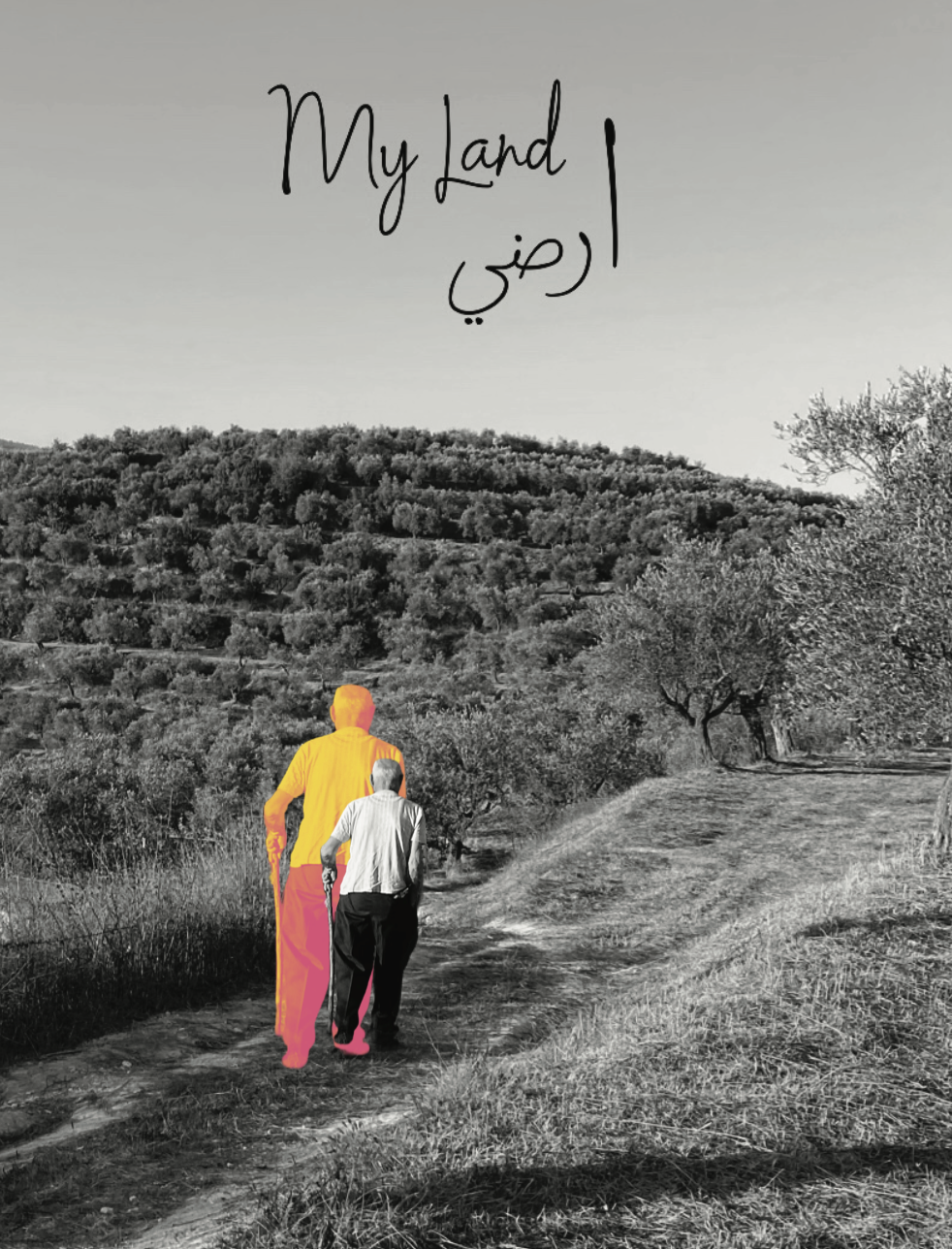
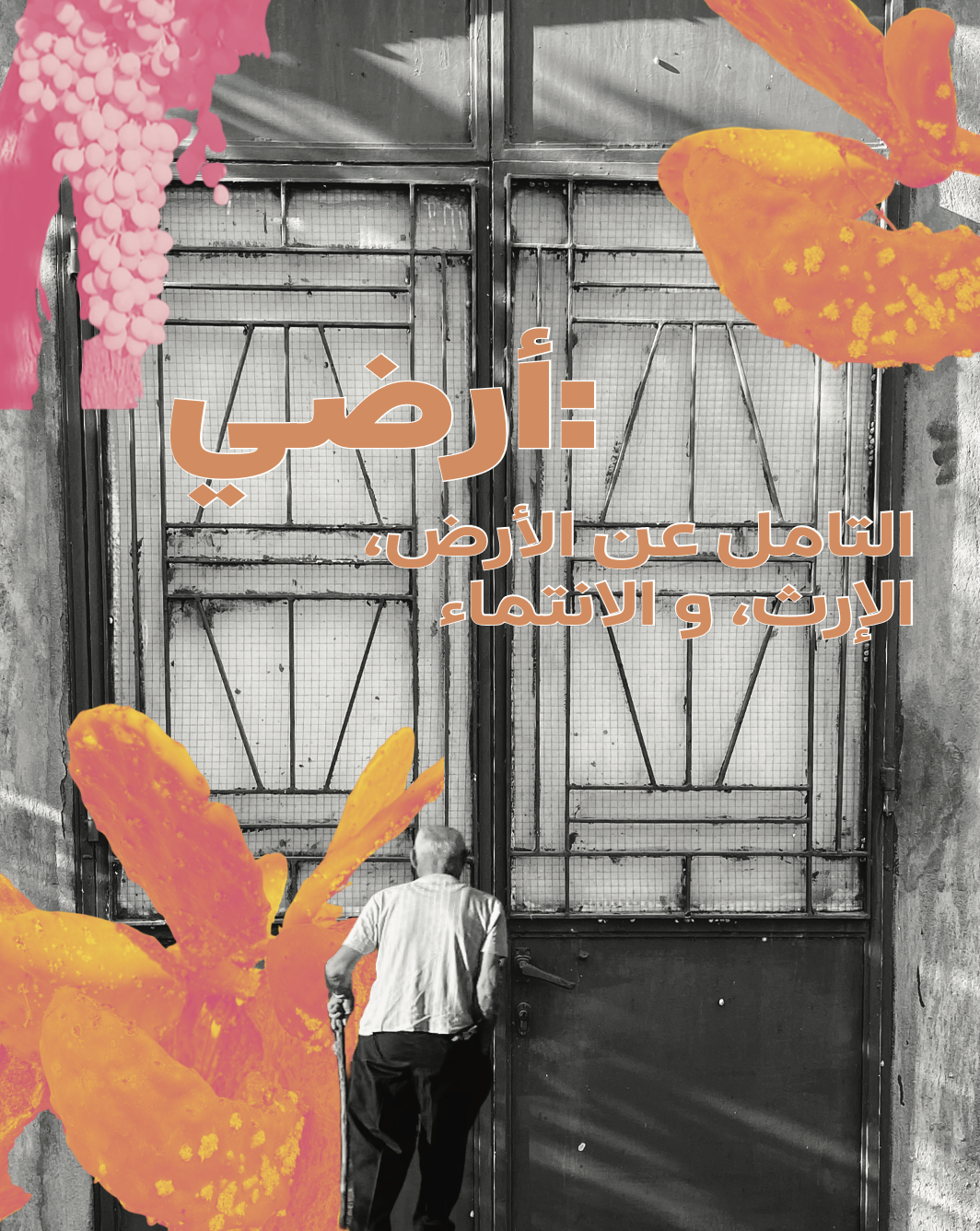
Ardi: A meditation on land, legacy, and belonging
أرضي: تأمل عن الأرض، الإرث، والانتماء
By Freja Newman
Jonathan Chalouhi is the director of the short film, أرضي (Ardi), that recently premiered at Miya Miya Film Club’s first birthday event in November, 2025. Ardi tells a story of land, home, and the agricultural identity of the Lebanese people. Set in his village of Dar Baachtar in northern Lebanon, the film follows Gidou George, Chalouhi’s grandfather, through the land he has tended his entire life. From the well he built 50 years ago that provided his community with water during the war, to the grapes, figs, and olives he grows and shares, George not only embodies Chalouhi’s family history, but also the generosity, wisdom, and perseverance of the Lebanese people and their land.
“There’s an appreciation and care for nature that’s really ingrained in my blood and my family,” Chalouhi reflects. “Dar Baachtar has never changed and my house has never changed and that’s our identity. We know every corner of it, every neighbour, every house, every season, we’re so fluent with it.” This fluency is passed down through generations, through experiences, through the stories told and shared. Chalouhi stresses that he made this film not because he’s a filmmaker or studied cinematographer, but because his land, family, and community have so many stories that need to be heard.
“I filmed this not to take it to the screen or because I’m a filmmaker, but more because I had so many stories that I wanted to share and this was the medium for it,” he says.
For Chalouhi, film was the only form that felt accessible.
Although his background originates in music and composition, he found film was what would resonate with his family and the audience no matter where or what experiences they came from. It was a way that he could speak to almost every sense so that everyone could understand.
“I showed it to my gidou and he said ‘seeing it was the best part’, then when I showed it at the film festival, they said ‘the stories were the best part’, and when I showed it to my uncle, he said ‘the music was great’,” Chalouhi remembers. “In film, each person can take something they resonate with and connect to.”
For Ardi, the filmmaking process was both collaborative and personal, reflecting the stories and identity on display.
Every aspect of the process was an homage to his family and heritage.
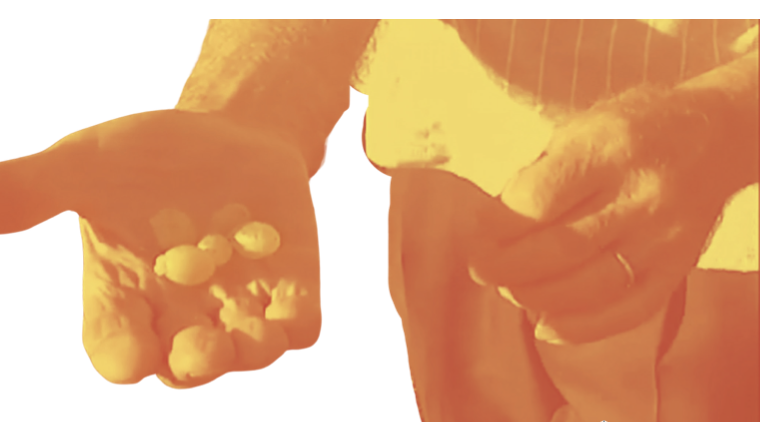
He shot the film on a mini dv video camera just like his dad used to in the nineties. As he filmed, his mum was by his side, keeping the conversation flowing and natural. On the other end of the camera, his gidou picks and offers grapes from the vine he planted, replying with the same tender care he has for his land.
“I knew it was going to be almost like a home video style film,” Chalouhi says. “But I felt like that made it better, because that’s what I wanted to tell and how I wanted to tell it. In the end, the ones involved with the stories were the ones that were part of the project.”
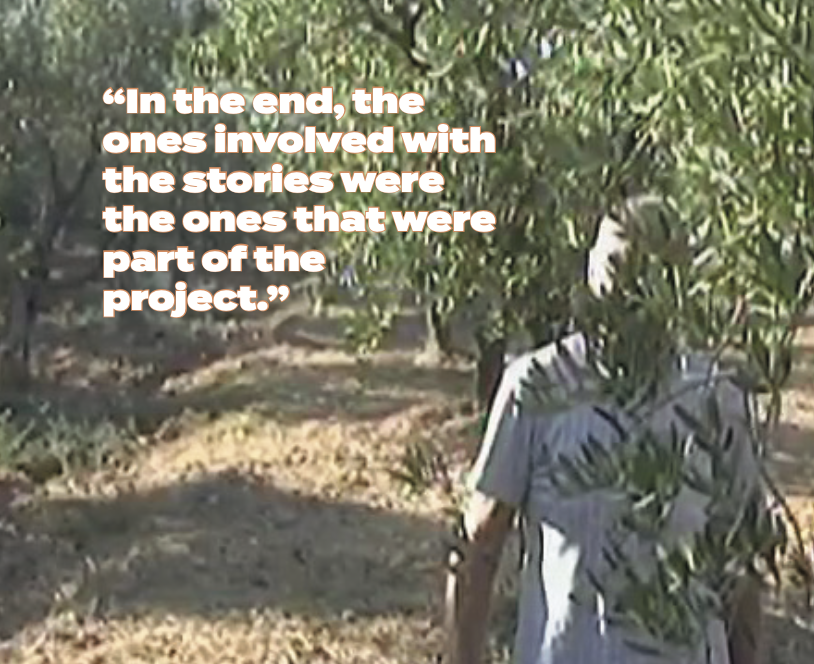
The spontaneous and intimate tone of both the film and process mimics what it feels like to have stories passed down from generations—to be the grandson or granddaughter listening attentively for wisdom you can only be guided through by hands that look like your own.
Chalouhi wanted the film to be more of a reflection, than an informative documentary. He intended for it to be a compilation of small stories and moments, filming shots of the land and his gidou working and speaking. For the music, Chalouhi sampled oud tracks from Joseph Tawadros, the multi-award winning Egyptian-Australian instrumentalist.
“I chopped up a lot of the oud samples, edited them together, added effects, and then composed everything behind that,” he says. “There was a lot of ambience, especially when [George] was speaking as it wasn’t about the music. The music was just there to offer moments of reflection.”
Conscious that he didn’t have a traditional background in film, Chalouhi drew inspiration from the greats. In films like Safar Barlik (1967), directed by Henry Barakat and featuring the iconic Fairuz, a Lebanese singer and actress, he was influenced by the visual direction. He noticed how the diverse natural landscape of Lebanon was documented and wanted the land to speak for itself, immersing viewers in the agricultural identity that characterises his gidou, his country, and his film.
However, it was Lebanese film director Ziad Doueiri, known for West Beirut (1998), who taught Chalouhi how to tell stories.
“I think the summer prior to making Ardi I had watched a few of his films,” he says. “It was cool because he was telling stories of Lebanon in film, in a modern way that I hadn’t seen before. They were cool stories and cool films, but they were also telling stories of my country. I remember thinking, ‘I didn’t know that films could really do this.’”
Chalouhi explains his favourite stills from the film:
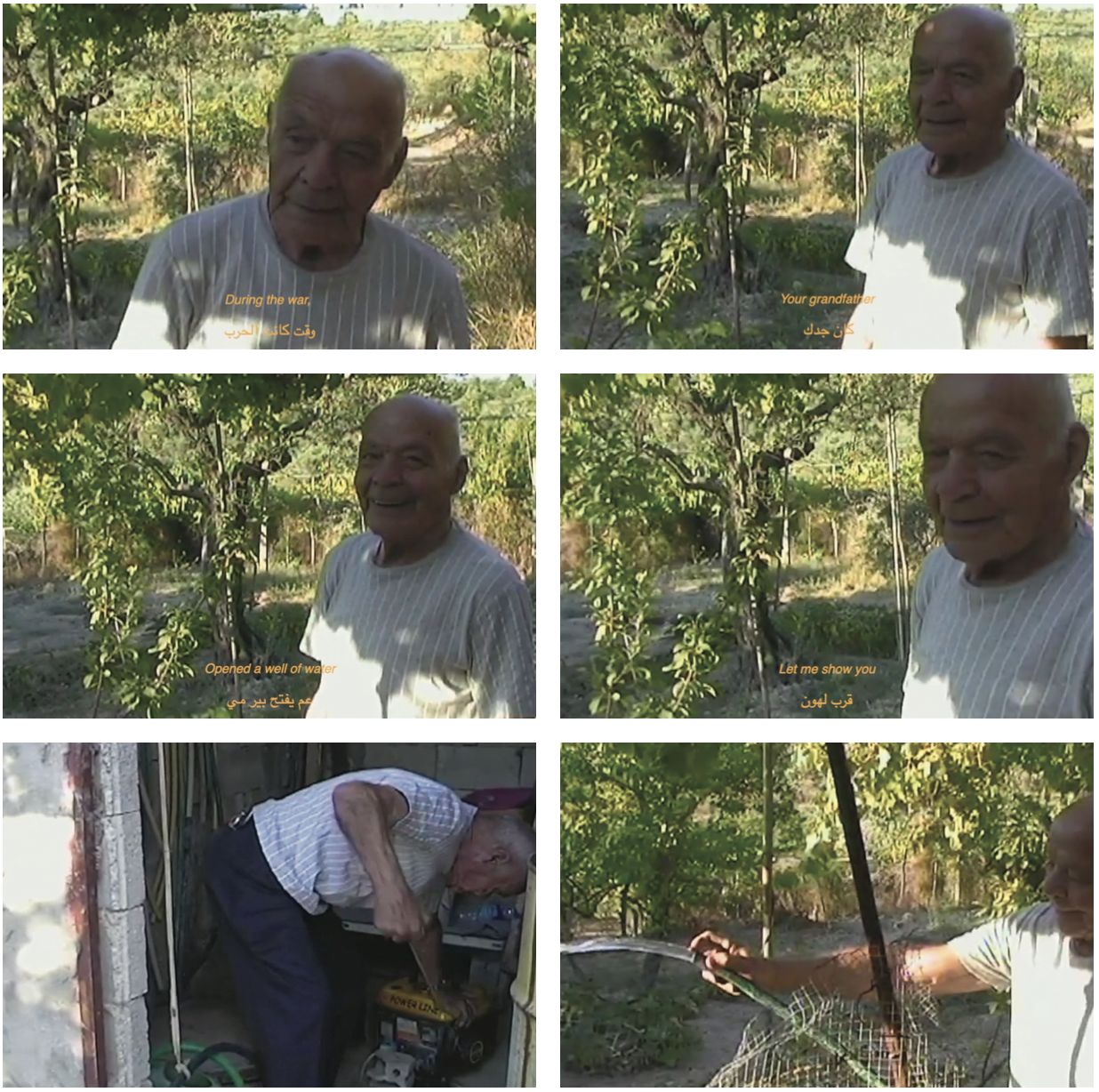
“At the beginning when he’s starting the well, he tells me the story of how he had to build a well during the war because there was no water. I only included a bit of this story in the film, but in our conversation he speaks of there being no water for him and his community to grow things. People weren’t growing anything anymore. So, he built this well and made sure that people from the different plots of land around him could also access the water. He provided for everyone.
He built this well with his own hands and even seeing him continue to use it now, to see it still standing and operating was so cool. I could imagine the same piece of land and that same generator that I saw him use to start it existing 50 years ago, and that was kind of cool to see the history that it holds.
He knows exactly what to do, without any technology, and he does it all on his own, because he loves this kind of stuff. He loves his land.”
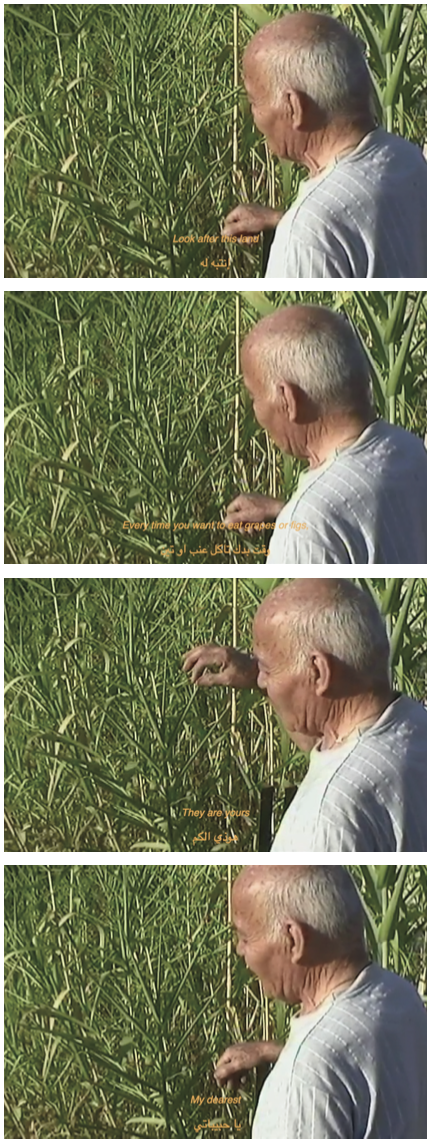
“At the end, he talks about how the land is ours and says, ‘If you ever want fruit, vegetables, or food, this land is yours and it’s fine. It belongs to you.’ I thought this was nice because it shows that it’s always passed down. This land, before being his, belonged to his parents, so it’s such a family legacy thing, our land.
This idea is especially true for Lebanon as our land is so big for us, and we hold onto it so tightly because people will try to come and take it. So, it kind of cements your family in one place. It was cool to hear him say that, to reinforce that this land is ours as well, and that we hold responsibility to it and that it means something to us.”
Chalouhi reflects on what it felt like to finish the film.
“It was relieving, but it was also really exciting to be able to show people and see what they thought,” he says. “It was also really nice to know that now I have a story and it’s made, and 20 or 30 years from now, this story of him, my gidou, will live on. It was cool to know that I have a piece of him that’s not going anywhere.”
Chalouhi showed his gidou Ardi when he visited Lebanon in December, a month after the Miya Miya screening and six months after he filmed it. George was sick and still recovering from a fall that left him in bed, unable to walk.
“It was crazy because six months ago we were out in the field and then when I visited again, he was in bed and couldn’t move,” Chalouhi says. “He was really down and low in spirits, but when I showed him the film he loved it and he was so excited. He said, ‘I want to start walking again and get back up because I want to do another part and do it again with you next summer.’ His reaction was really nice, because that was kind of what it was all about.”
Chalouhi made this film not only to capture his gidou’s stories and history, but to also reflect on how this storytelling has defined who he is today.
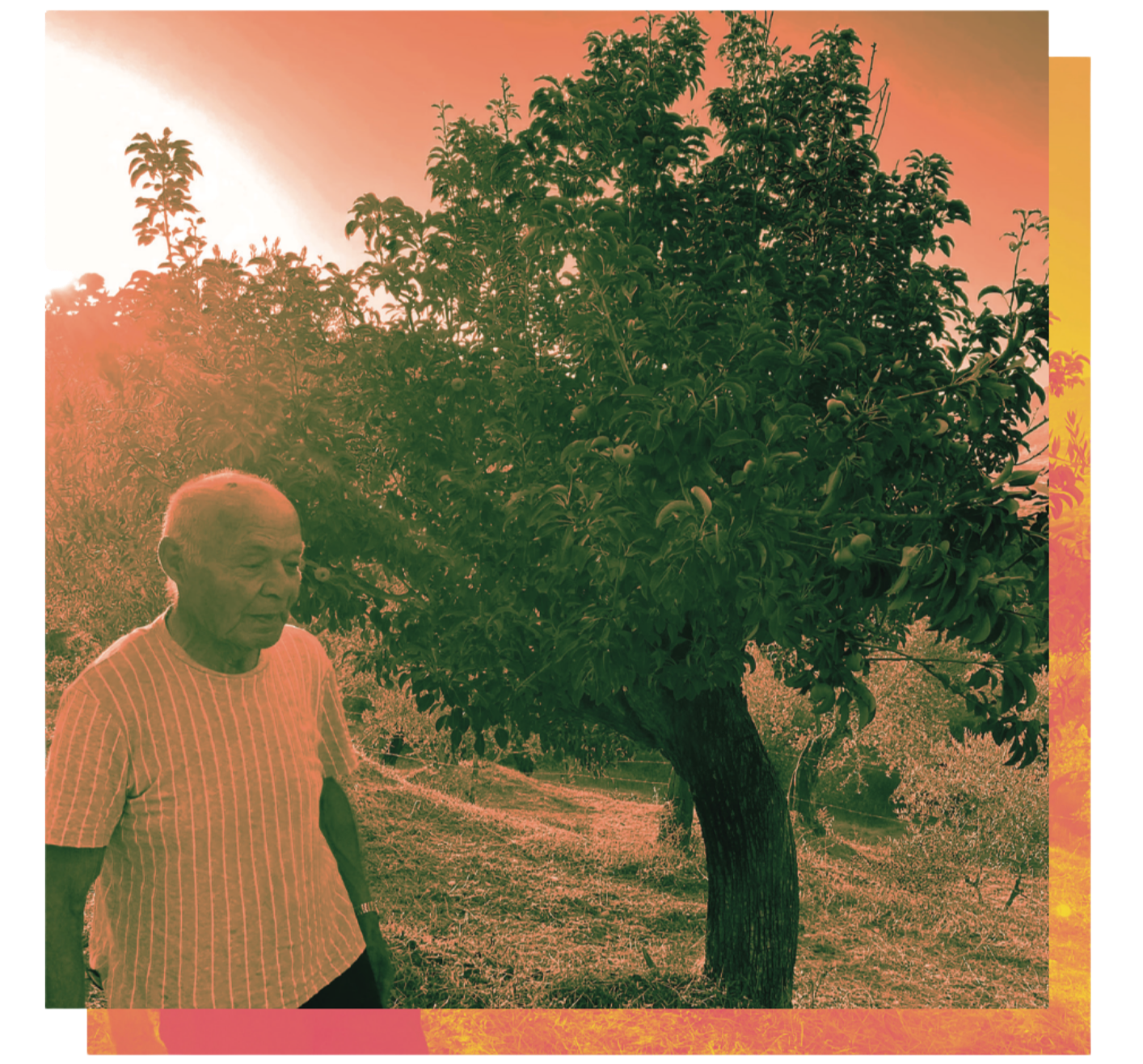
“We live right near my gidou and he is just the kindest guy and is so generous,” he says. “He loves his land and farming and has the craziest stories because he’s been on this land for so long.”
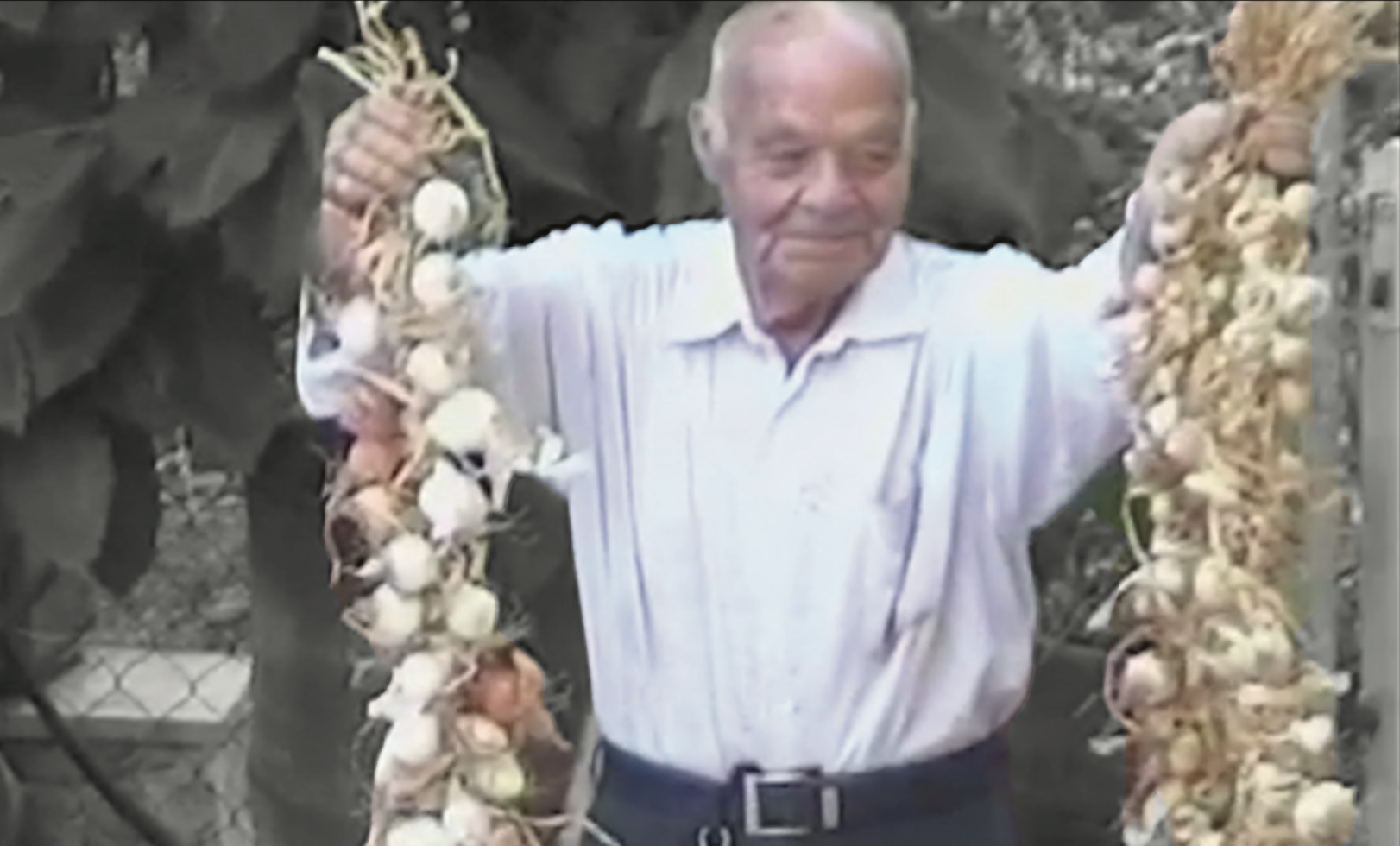
He remembers how his gidou would start each day at 4am to go work on the land, and explains how he still has that same routine today, even at 80 years old. From the fresh lemonade he would make for the whole family, to the pet snake he tamed and had by his side around the house, Chalouhi’s stories of his gidou that he’s lived and listened to are endless.
These stories are what grounds Chalouhi’s identity.
Born in Turkey yet growing up overseas in Egypt, Dubai, and Australia meant that he was no stranger to change. However, he speaks of how appreciative he is for his village and to have something that has always stayed the same. “It’s harder for a lot of people my age to live there now and so they’ve all moved overseas. But they, we, always come back for summer or Christmas and that will never change. No matter how bad the situation is, it’s our home and so we’ll always come back.” As older generations stay on the land and preserve its history, these stories, tied to a place and people, live on from afar in the minds of younger generations, in the stories they tell, and in the identities they form.
“Belonging is a bit harder to describe because I don’t really fall into any category,” Chalouhi admits. “I’m not Lebanese enough when I go home because I grew up overseas and I’m not Australian enough here because I’m Lebanese as well. The identity thing is sometimes a bit hard because I’m not 100% from one place.”
However, Chalouhi reflects on the advantages of this and how nice it is to be able to bring inspirations and influences from each side of his identity. “I can combine sections of my identity to make up who I am,” he says. “Then I can use that to influence those different communities.” He wants to capture the content of Dar Baachtar to show the world what Lebanon and his home really looks and feels like, and he records his gidou’s stories so his family overseas can connect.
Storytelling is Chalouhi’s anchor for everything he creates.
These stories are particularly important when countering the false narratives and untruths that damage a people and a place.
“Using the Arab world as an example, there's so much hate and war and that's kind of all the press we get,” he says. “So our job as creatives is to show that there's more than that, that we’re more than that, and show that it's not actually just war happening, but there are also all these stories and all this really cool art and music and food that’s made here.”
Miya Miya Film Club is a reflection of this truth. This independent community-led film and arts initiative is committed to celebrating and elevating the voices of the South West Asian and North African (SWANA) region. Particularly now, as SWANA communities are more marginalised than ever, spaces that are safe and built for community, belonging, and collaboration are an urgent need.
“Miya Miya is really cool because it brings all these people with similar values or who are from the same place together, in a different place,” Chalouhi says. “These spaces ask you to be Lebanese, to be Arab, to come and speak to and meet other Arab people, to see Arab films, eat Arab food, and really embrace your culture. I’d never really seen that before.”
While it celebrates SWANA culture and belonging, spaces like Miya Miya Film Club are far from exclusionary. The audience and community that attend each event consist of people from both the SWANA region and beyond, making it a safe space for anyone and everyone to appreciate new and nuanced art, media, and storytelling.
“The content is Lebanese, not the audience, which is important,” Chalouhi says. “It’s not a Lebanese secret club, but is a place where there is a lot of Lebanese or Arab media and art that people can see that they can’t find in other places.”
It’s spaces like this that encouraged Chalouhi to create Ardi in the first place, and is where he has been able to connect with other creatives and share ways they can tell stories together.
In Ardi, the filmmaker, like his gidou, shows us nothing but generosity, welcoming us to his family’s land, history, culture, and memory. He reminds us what it means to return, to belong to a land, and to have that land belong to you. He chose to make this film, not because he’s a filmmaker, but because he had stories to tell, and realised these are the types of stories we need.